Brush Sander Alternative: Robotic Sanding for Production Shops
If you are researching a brush sander, you are trying to solve a real problem - getting a consistent sanded finish across profiled and flat parts without throwing more labor at it. Brush sanders have been the traditional answer for knocking down profiles and easing edges. But they have limits, and a lot of shops are finding a better fit in robotic sanding.
A brush sander conforms to a profile, but it does not break corners cleanly, struggles with consistent edge work, and still leaves your crew finishing by hand. Stolbek robotic sanding cells were built by woodworkers to close that gap.
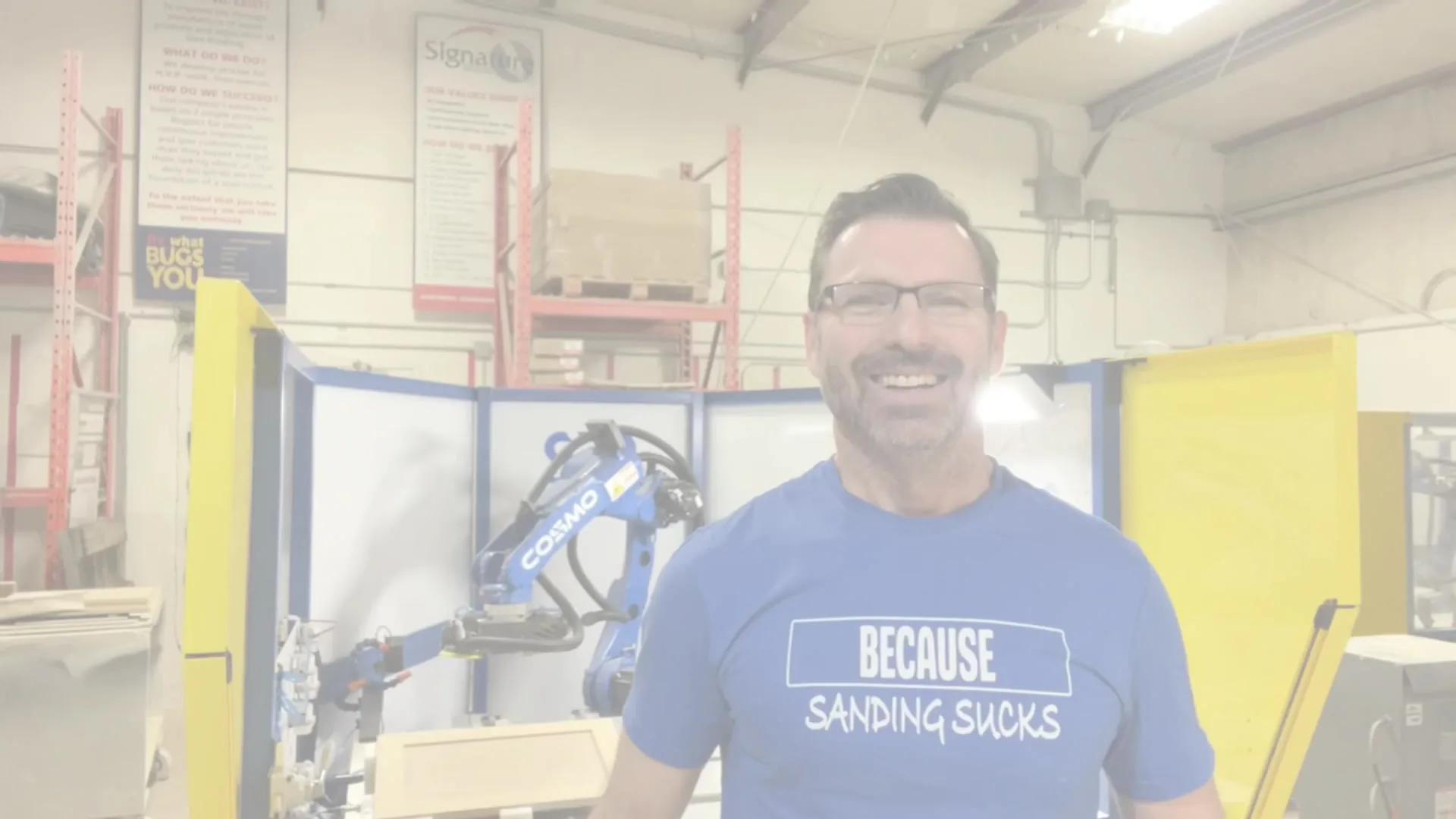
See Robotic Sanding in Action
Watch the Stolbek Cosmo cell sand faces, edges, and corners in one pass, the work a brush sander leaves unfinished.
What a Brush Sander Does Well, and Where It Stops
Brush sanders excel at following contours and softening detail on molded or profiled parts. They are simple and fast for that one job. Where they stop: they do not reliably break corners, they are inconsistent on edges, and they leave the face-edge-corner sequence split across multiple steps and operators. For a production shop running cabinet doors and panels at volume, that means rework and a finish that varies part to part.
How Robotic Sanding Handles What a Brush Sander Cannot
A Stolbek robotic cell sands the face, breaks the corners, and finishes the edges in one pass, identically on every part. No second station, no hand finishing, no part-to-part variation. You load parts, select the program, and the cell runs the full sequence. That is the difference between a tool that does one part of the job and a system that does the whole job.
Is a Brush Sander or a Robotic Sander Right for Your Shop?
If you only need to soften profiles on a low volume of parts, a brush sander may be enough. If you are sanding cabinet doors, panels, MDF or primer at production volume and the sanding station is your bottleneck, a robotic cell removes the bottleneck and the labor problem at the same time. Most shops weighing a brush sander against a robot are really weighing one more manual step against automating the step entirely.
Run the numbers for your shop with the ROI tool, or see why shops automate sanding.