How Stolbek Robotic Sanders Compare for Your Shop
Stolbek builds turnkey robotic sanders that sand faces, edges, and break corners on cabinet doors and panels in one automated cycle. No programming, no G-code, no integrators. Designed and built in Canada by woodworkers, for woodworkers.
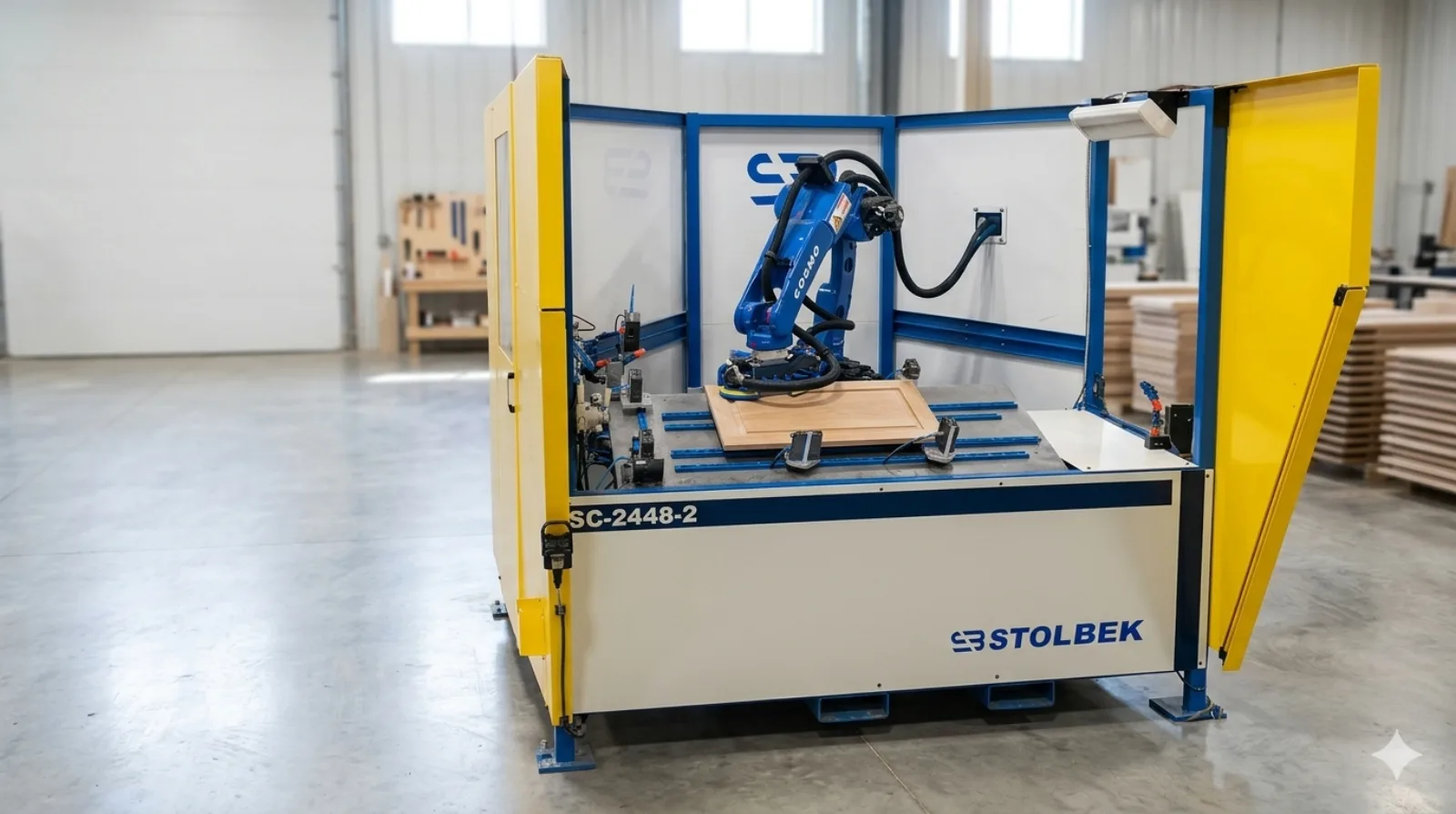
See a Robotic Sander Running
One minute of the Stolbek Cosmo SC sanding stiles, rails, edges, and breaking corners on a real cabinet door, no operator at the machine.
What Is a Robotic Sander?
A robotic sander is an automated sanding system that uses an industrial robot arm to sand parts in place of manual labor. In woodworking, a robotic sander loads a cabinet door or panel, then sands the face, edges, and corners to a consistent finish without an operator running a hand sander. The result is the same finish on every part, every shift, with no sanding bottleneck.
Most robotic sanders on the market are general-purpose arms aimed at metal finishing and polishing. A Stolbek robot sander is purpose-built for woodworking: cabinet doors, panels, MDF, primer, paint-grade, and stain-grade parts. Every cell ships pre-configured for the parts your shop actually runs.
Stolbek is the only sanding robot that sands faces, breaks corners, and sands edges in one turnkey cell. Most systems still leave edge sanding to a person. That is the difference between a robot that helps and a robot that finishes the job.
No programming. No G-code. No integrators. Load doors, press go.
Stolbek Robotic Sander Models
Stolbek builds a full lineup of robotic sanders for every shop size, from standard cabinet doors to oversized panels. Every system is turnkey, powered by industrial Yaskawa robots, and built in Canada.
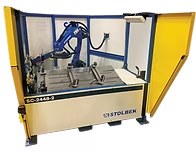
Cosmo SC
Turnkey robotic sanding cell for cabinet doors and panels. The system most shops start with.
Learn More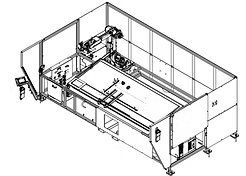
Cosmo Slide
Highest-capacity panel sanding robot for table tops, pantry doors, and fridge gables.
Learn More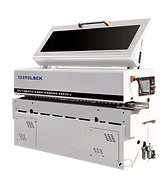
Ultimate Edge Sander
Multi-grit edge sander that breaks corners in one pass for MDF and primer doors.
Learn More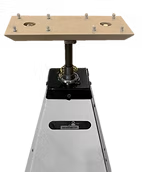
Spin Bot
Pneumatic spray booth turntable for automated finishing.
Learn MoreNeed to see the lineup side by side? Compare all Stolbek models.
Robotic Sander vs Manual Sanding
A robotic sander replaces the slowest, hardest-to-staff job in the shop with a machine that runs all shift. Manual sanding depends on who showed up that day, varies part to part, and causes repetitive strain injuries. A robot sander delivers identical results on every part and frees your people for higher-value work.
The cost of manual sanding for a typical cabinet shop runs $8,000 to $10,000 per month in direct labor before you count turnover. Replacing a sanding hire costs another $3,000 to $5,000 in recruiting and training, and most shops cycle through that hire more than once a year. Rework from inconsistent hand sanding adds another $1,000 or more per month in materials and finishing time.
A robotic sander removes those numbers from the spreadsheet. Throughput becomes predictable, quality stops drifting between shifts, and the worst job in the building no longer exists. The people who used to sand move to assembly, finishing, CNC operation, and inspection, where they actually want to stay.
For the full picture, read the complete robotic sanding guide, the deep robotic vs manual sanding comparison, or the wide belt sander comparison.
How Much Does a Robotic Sander Cost?
The cost of a robotic sander depends on the system and your production needs, but most shops reach payback within 12 to 18 months through labor savings alone. A robotic sander typically replaces the equivalent of one to two full-time sanding positions while improving quality and throughput. Stolbek provides a custom quote and an ROI estimate based on your part mix and volume.
Pricing comes down to a few simple drivers: which model fits your largest part, how many shifts you run, and whether you need options like automatic loading or extended-reach motion. A standard Cosmo SC cell for cabinet doors is the most common starting point. Larger panels move you to a Cosmo Slide.
The more important number is the cost of not automating. The combined labor, turnover, and rework bill on a manual sanding department often exceeds the monthly payment on a financed robotic sander before the first shift even runs.
Want a number for your shop? Calculate your ROI, or review the woodworking automation statistics behind the labor and rework numbers.
Why Buy a Robot Sander From a Manufacturer, Not an Integrator
Buying a robotic sander direct from the manufacturer means you get a purpose-built machine, not a custom integration project. System integrators assemble a generic robot arm with third-party tooling, which adds cost, programming, and long lead times. Stolbek designs, builds, and supports its robot sanders in-house, so the machine arrives turnkey and you talk to the people who actually make it.
A manufacturer robot sander ships pre-configured for woodworking. There is no programmer to schedule, no integration scope to negotiate, and no finger-pointing between the robot vendor, the end-of-arm tooling vendor, and the controls vendor when something needs attention. Lead time is measured in weeks, not quarters, and support comes from the same team that built the machine.
Stolbek's founder ran a cabinet shop. The company is a woodworking company that built a robot sanding machine for itself first, then turned it into a product. That is a different starting point than a robotics lab that wandered into woodworking, and it shows in every part of the machine.
Designed, built, and supported in Canada. Direct line to the people who make it.
Robotic Sander FAQ
See a Robotic Sander in Action
15 minutes, no pitch deck, just the real thing. We will look at your parts and volume and tell you which system fits, or if automation is not the right move yet.