MDF, Solid Wood and Primer Door Sanding: 3 Grits, One Pass, Perfect Edges
Sanding MDF and primer doors for a paint-grade finish comes down to two things: working the edges so they do not fuzz, and keeping pressure identical on every part so you never burn through the coat. Both are hard to do by hand across a full production run, and both are exactly what the Ultimate Edge Sander automates. Three grits and a corner break in one pass, under 30 seconds a door.
MDF, solid wood, and primer doors make up a huge share of cabinet production, and they are some of the most tedious parts to sand. The material is dusty, the edges are unforgiving, and the primer coat demands perfectly consistent prep or the finish shows every flaw.
Most shops still hand-sand MDF edges. It is slow, it is inconsistent, and turnover on that station is brutal because nobody wants the job. The Ultimate Edge Sander was built specifically to take that problem off your floor.
The MDF Sanding Problem
MDF sanding is different from solid wood sanding. The material is dense and uniform, which is good for machining, but it is also dusty, abrasive on sandpaper, and unforgiving when sanded inconsistently. The trouble is almost never the faces. It is the edges and the consistency.
Edges are the hardest part. Too much pressure and you break through the primer or round over the profile. Too little and you leave tool marks, fuzz, and inconsistencies that show under the topcoat. Manual operators adjust by feel, but feel varies between people and it drifts with fatigue over a shift.
Corner breaking has to be uniform. Every door in the batch needs the same edge radius. Manual corner breaking is inconsistent by nature, some corners get more and some get less, and under a finish coat that variation is visible.
Dust is relentless. MDF generates far more fine dust than solid wood. Without proper extraction it clogs sandpaper faster, contaminates the finish environment, and creates real health concerns for operators.
Ultimate Edge Sander - Built for MDF
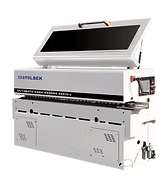
The Ultimate Edge Sander ES232-2 was designed from the ground up for MDF, solid wood, and primer door production.
Technical Specifications
Materials the Ultimate Edge Sander Handles
The Complete MDF Door Workflow
Edge Sand & Corner Break
Doors feed through the Ultimate Edge Sander and come out with sanded edges and broken corners in under 30 seconds. Three grits. One pass. Done.
View Ultimate Edge SanderFace Sand
The Cosmo SC robotic sanding cell handles face sanding on MDF doors with consistent pressure that prevents burn-through. The robot automatically reads part size - no setup changes between batches.
View Cosmo SCSpray Finish
The Spin Bot pneumatic turntable automates part rotation in the spray booth for even coating. Runs on shop air. No electricity needed. Pairs directly with the edge-sand-then-spray workflow.
View Spin BotWatch a Cosmo Sand Raw MDF
Same pressure, every pass. That is what kills burn-through on a production run.
Three Machines. Zero Manual Sanding.
Every MDF door goes from raw to finish-ready without a single operator picking up a palm sander.
From raw MDF to finished door, with no manual sanding, no manual rotation, and no quality variation. Three machines working as one production line.
See how millwork and door manufacturers apply this workflow across paint-grade production, or read the complete edge sanding guide for the fundamentals.
Why MDF and Primer Sanding Wears Crews Down
MDF and primer sanding is one of the most tedious jobs on a shop floor. Edges soak up primer and need knocking back between coats, the dust is relentless, and the work is repetitive enough that quality drifts as the crew tires. It is exactly the kind of task automation was built for - consistent, repeatable, and hard to staff. Stolbek machines handle MDF and primer sanding the same way every time, including the between-coat edge work that slows a finishing line down.
Between-Coat Primer Sanding
The repetitive edge work that automation handles identically every pass.
Consistent Edge Finish
No quality drift as the shift wears on.
Less Dust Exposure
Automating the dustiest sanding step.
Frequently Asked Questions
Explore more: Ultimate Edge Sander · Complete Edge Sanding Guide · Robotic Sanding Guide · Supplies
Related applications: Panel Sanding · Cabinet Door Sanding · Spray Finishing
See the Ultimate Edge Sander process a door in under 30 seconds
That's not an exaggeration. Profile, sand, and corner break - one pass.